
Crop · Fodder
LNC for Fodder
Saudi fodder — primarily alfalfa and Rhodes grass — consumes vast water per tonne of feed produced. LNC changes that math.
-40%
Irrigation
+15%
Yield
3y
Duration
The challenge
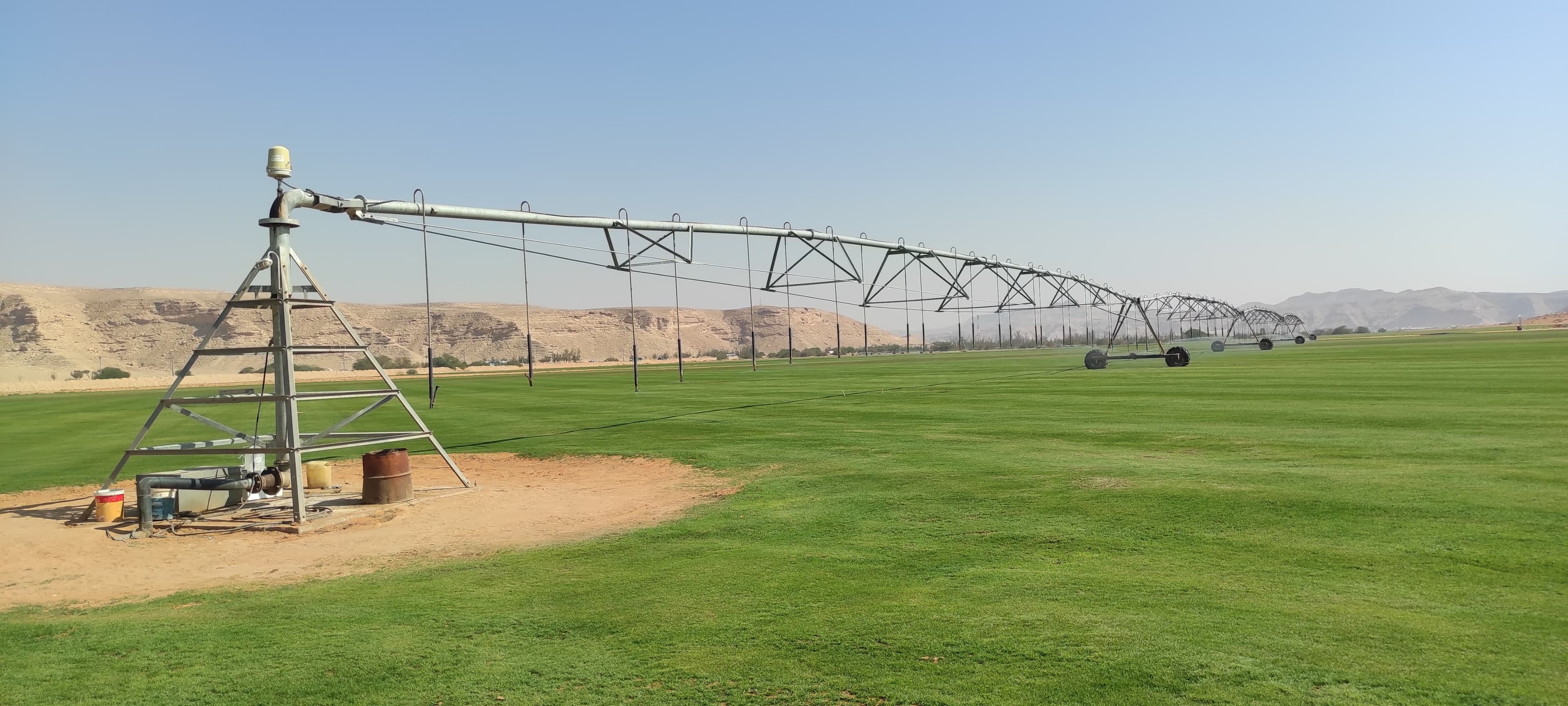
Fodder operations — alfalfa, Rhodes grass, and mixed forage — are among the largest water consumers per hectare and per tonne of feed produced in KSA. With the Kingdom increasingly prioritizing water efficiency in fodder policy, operators need strong efficiency levers.
Mechanism
LNC applied through pivot irrigation improves root-zone water retention and reduces deep percolation, meaningfully cutting irrigation while maintaining harvest frequency.
Typical results
What to expect on fodder
- −35 to −45% irrigation volume under pivot systems
- +10 to +20% biomass yield on well-managed operations
- Maintained or improved cutting frequency
- Lower pumping energy costs — a direct OPEX win
Application notes
- Applied through pivot irrigation
- Best applied during establishment or at the start of a growing season
- Compatible with alfalfa, Rhodes grass, and mixed forage stands
Seasonality
For KSA fodder rotations, LNC is typically applied at the start of the main summer growing season.
Fodder FAQ
- Does LNC affect fodder nutritional value?
- No direct effect. Consistent moisture tends to support more consistent protein and digestible fiber content — generally favorable.
- How does LNC fit into fodder water policy changes?
- LNC is one of the few technologies that can materially improve water productivity per tonne of fodder produced — directly aligned with MEWA policy direction on fodder water efficiency.